A roof warranty matters when the crew leaves, the last nail is driven, and the new shingles glint in the sun. It is the document that tells you who pays if something goes wrong, how long they will pay, and what you must do to keep the promise valid. For homeowners, the practical difference between a two-year workmanship warranty and a 50-year manufacturer warranty can be thousands of dollars and years of worry. I have watched homeowners assume protection they did not have, and I have seen careful buyers avoid expensive disputes by reading three short paragraphs before signing. This article explains the typical coverage, common gaps, how claims are handled, and what to ask your roofing contractor so the warranty actually protects you.
Why a warranty exists and who writes it
There are two separate warranties after a roof installation. One comes from the manufacturer of the roofing materials and covers defects in the materials themselves. The other comes from the roofing contractor and covers workmanship, the quality of the installation. A roofing company that installs shingles will often provide a workmanship warranty for a limited period, sometimes backed by a company guarantee or by a third party. The manufacturer supplies a materials warranty that will often use the word "limited" and include specific conditions and exclusions.
Manufacturer warranties vary by product. Asphalt shingle warranties commonly advertise 20, 30, or 50 years, but most of those are not full coverage for the entire period. Many are prorated, meaning the value covered declines over time. Some higher-end products offer nonprorated coverage for a set initial period, perhaps the first 10 years, and then switch to prorated pricing. Metal roofing, tile, and membrane systems have their own warranty structures. The crucial point is that a long number on the box does not automatically mean full replacement at no cost for that entire time.
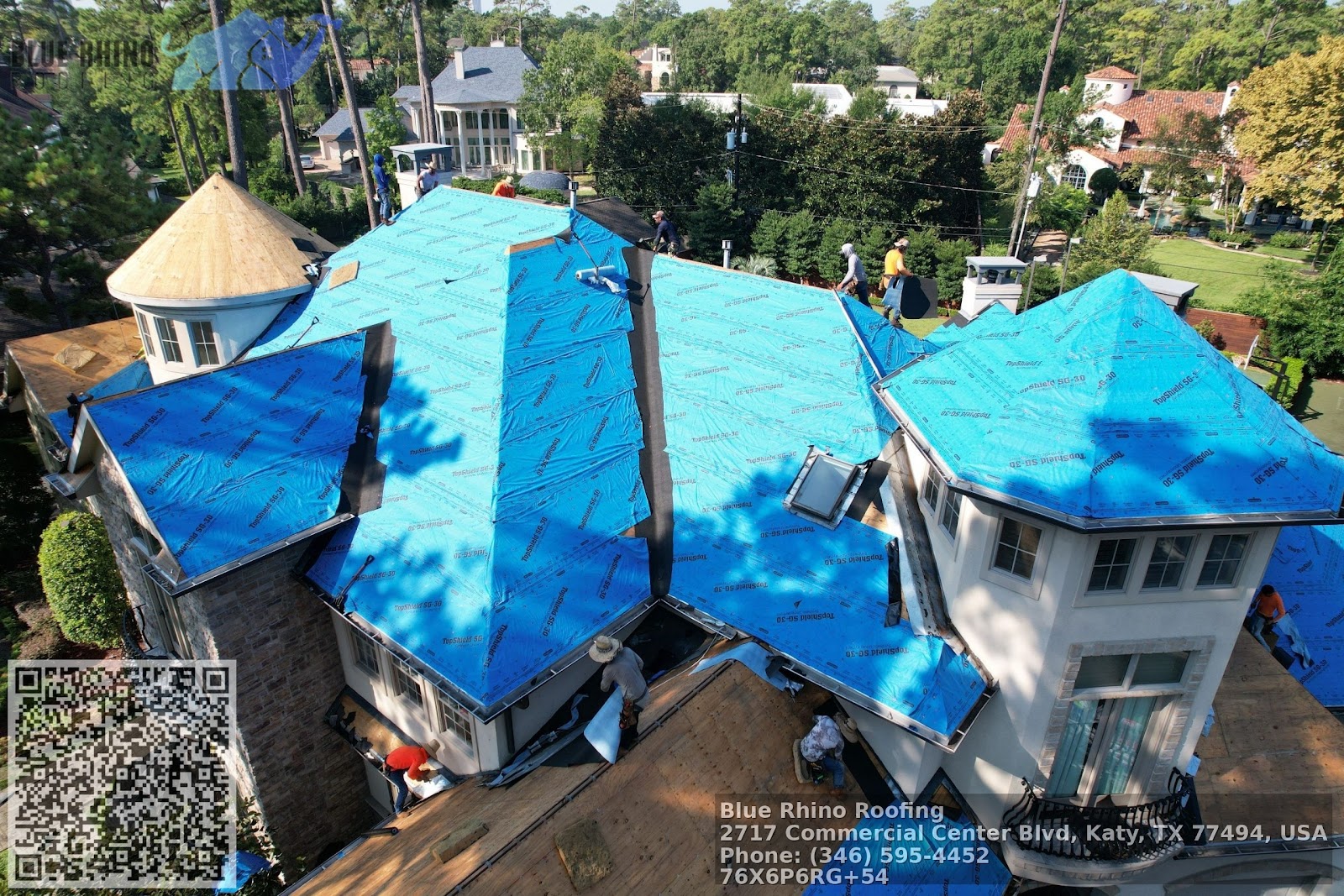
Workmanship warranties tend to be much shorter, often 1 to 10 years. Two to five years is common for smaller roofing companies. Larger companies or those that use third-party warranty programs sometimes offer longer workmanship coverage. Blue Rhino Roofing Roof installation Those longer warranties rarely cover every conceivable failure; they typically guarantee that the roof was installed according to the agreed plan and common industry practice. If a leak arises because a flashing was improperly installed or nails were missed in a transition, the workmanship warranty is where you will start.
What is typically covered
A manufacturer warranty covers material defects such as premature granule loss on asphalt shingles, cracked tiles due to manufacturing flaws, or membrane blistering caused by defective product. Manufacturer warranties may also include wind uplift limits and hail damage clauses for certain products if the shingle or panel was tested and rated.
A workmanship warranty covers the specifics of the installation. Examples of covered problems include improperly installed flashing around vents, sagging roof decking caused by poor fastening patterns during re-roofing, and improperly fastened ridge caps that allow water infiltration. Workmanship warranties do not usually cover problems that develop because of age, lack of maintenance, or external damage such as storm-driven debris.
How coverage is limited and common exclusions
Manufacturers and roofing contractors expect roofs to be maintained and inspected. Many warranty claims are denied because the homeowner did not keep up with simple maintenance or because a third party altered the roof after installation. Typical exclusions you will see spelled out in warranty language include damage from ants or other pests, damage caused by roof traffic after installation, neglect such as failure to clear gutters, and modifications or repairs made by someone else.
Here is a short list that captures the most frequent exclusions to look for when you read a warranty:
- Damage from inadequate attic ventilation or improper insulation that causes moisture buildup and rot. Failures caused by ponding water on low-slope areas unless the product is rated for standing water. Problems from corrosion due to exposure to chemicals or environmental contaminants not covered by the product testing. Aftermarket modifications or repairs done by a different roofer that void the warranty.
Pay attention to requirements that sound administrative but are enforceable, such as the need to register the product with the manufacturer within a certain number of days after installation, or the requirement to have annual inspections and keep records. Those small steps will decide whether a claim is entertained.
Prorated vs nonprorated coverage and real cost implications
Prorated warranties reduce the payout over time. Imagine a shingle with a 50-year prorated warranty. In year one you might be entitled to nearly full replacement value, but by year 25 the manufacturer’s portion might be only a fraction of the new shingles’ cost. Nonprorated coverage, when offered, gives you better protection for the initial years. For example, a common manufacturer arrangement is to cover product replacement in full for the first 10 years without proration, then shift to prorated coverage after year 10.
Workmanship warranties are rarely prorated; the contractor either fixes the problem or is in breach. Even so, workmanship coverage usually expires much sooner. When you combine a short workmanship warranty with a long but prorated manufacturer warranty, you should budget for potential costs once the workmanship period ends and the manufacturer’s payment is reduced.
Transferability and selling a home
Warranties may be transferable when you sell the house, but not always. Manufacturers sometimes allow a single transfer if the new owner registers the warranty and pays a transfer fee. Contractors may restrict transferability or allow it only with an inspection prior to sale. If you plan to sell in the near term, a transferable workmanship warranty increases buyer confidence and can be a marketing point in listing materials.
Make sure you understand any transfer steps. A warranty that requires notice and inspection within 30 days of sale is not transferable unless you complete those steps. A buyer will ask for documentation, so keep the original warranty documents, proof of registration, and records of maintenance tasks and inspections.
How claims are processed — practical steps and timing
When a leak appears, the clock starts in multiple ways. You must make the initial contact to your roofing company or manufacturer following their prescribed process, usually found in the warranty paperwork. Most manufacturers require you to notify the roofing contractor first, then the contractor will work with the manufacturer if necessary. Some manufacturers require you to complete a registration form and submit photos. Others insist that you allow an on-site inspection before any repairs.
Expect these steps during a claim:
Contact the roofing contractor who performed the work, describe the problem, and provide photos if possible. Contractor schedules an inspection to determine if the failure is due to workmanship or materials. If the contractor determines a manufacturer defect, they will contact the manufacturer for authorization. The manufacturer may request additional documentation, such as proof of installation date and copy of invoice. An adjuster or technical representative from the manufacturer may visit. If authorized, repairs or replacement are scheduled.Timing varies. For a straightforward workmanship issue, the contractor might repair within a few days. Manufacturer authorizations can take several weeks, particularly if they send a technical rep or require lab analysis of failed shingles. Be prepared for delays and keep a written log of communications and dates.
Maintenance obligations and simple tasks that keep coverage valid
Warranties usually require reasonable maintenance. That concept has teeth. Regularly clearing leaves from valleys, keeping gutters free of debris, and removing overhanging branches are the kind of maintenance activities that can prevent damage and keep a warranty intact. Leaving a plugged gutter that causes water to back up under flashing and onto a roof deck is often cited as homeowner neglect when a claim is denied.
Recommended actions to protect the warranty include seasonal inspections, particularly after major storms, and prompt repairs of small issues. If snow and ice are a recurring problem in your region, follow any manufacturer guidance for ice and water shield installation or recommended attic insulation levels. Keep photos or receipts for any maintenance work. If your warranty requires annual inspections, document them. Good recordkeeping is low-cost and removes ambiguity during a claim.
When a warranty claim can turn into a dispute
Disputes usually arise from differing views on causation. A contractor might say the leak stems from insufficient attic ventilation installed years earlier by the homeowner, while the homeowner believes the flashing failed due to poor installation. An inspector’s report can settle such disputes, but inspectors themselves can interpret causes differently. When a manufacturer declines a claim, they will point to the warranty clauses and exclusions in writing. If the workmanship warranty is still in force, the roofer should resolve the issue or negotiate a partial fix.
If you face a denial you think is unreasonable, escalate cautiously. Present documented maintenance, photos before and after the problem appears, and any invoices for repairs or inspections. Many disputes are resolved through mediation or arbitration clauses in warranties. Litigation is possible but costly, and courts look at the explicit warranty language and the homeowner’s actions. A practical approach is to get a second opinion from an independent roofing inspector who understands both building science and typical warranty interpretation.
How contractor reputation and financial backing matter
A warranty is only as good as the company behind it. A small contractor offering an unusually long workmanship warranty is not necessarily dishonest, but you should verify that the company has the financial stability and insurance to honor long-term obligations. Ask for proof of insurance, including general liability and workers compensation, and ask how many years the company has been in business. Some roofing contractors buy third-party warranty backing from national warranty companies; others simply issue their own guarantee. Third-party backing adds confidence because the warranty will be paid even if the contractor goes out of business, subject to the third party’s terms.
Practical guidance when hiring a roofing contractor
Ask for a written scope of work, a copy of the exact warranty documents you will receive, and instructions for registering any manufacturer warranty. Confirm whether the advertised product warranty will require the installer to follow special procedures, such as specific nailing patterns, premium underlayment, or special ventilation. If the contractor cuts corners on these items, the manufacturer may deny future claims.
Before you sign, check that the contract includes details about how warranty claims will be handled, such as the contractor’s obligation to respond within a certain number of days and the process for manufacturer interactions. Also verify the contractor’s experience with the particular product you select. A roofer who installs the same brand frequently will be more familiar with the manufacturer’s expectations and easier to work with if a claim arises.
A short checklist to ask a prospective roofing contractor
- Provide a copy of the exact manufacturer and workmanship warranty documents for review before signing. Explain any maintenance requirements, registration deadlines, and transfer conditions. Confirm whether the workmanship warranty is backed by a third party or only by the roofing company. Describe the claim process: who you contact first, expected response times, and documentation needed. Show proof of insurance and at least three recent references from customers with similar roofs.
Examples and edge cases that matter in practice

A homeowner in a humid region installed a high-end shingle with a 50-year warranty. Two years later, streaking and surface deterioration appeared. The manufacturer declined coverage because the attic ventilation was insufficient for that shingle profile, a condition spelled out in the warranty requirements. The roofer had not recommended upgrading ventilation during installation, and the homeowner ended up paying half the remediation cost. Had the homeowner confirmed ventilation parameters against the product bulletin and asked the roofing contractor for a ventilation plan, that expense might have been avoided.
Another situation involved a tile roof where a contractor used a different mortar mix than the manufacturer specified. Cracking occurred within three years. The manufacturer denied the claim because installation instructions were not followed, and the roofing company’s workmanship warranty had expired. The homeowner was left with a partial remedy from the contractor after a negotiation backed by a local contractor board complaint.
These examples show the trade-offs. Cutting a ventilation upgrade or skipping specified installation steps saves money up front but can end up costing considerably more when a warranty claim is denied.
Recordkeeping and organization for long-term protection
Keep a folder or digital archive with the purchase invoice, the signed contract, the full text of both the workmanship and manufacturer warranties, photos taken before and after installation, and registration confirmations. If your warranty requires annual maintenance or inspections, note dates and keep receipts. These records streamline a claim and reduce the likelihood of disputes about timing or responsibility.
If you intend to sell within the lifetime of any warranty, include copies in your seller disclosure package. Even if warranties are nontransferable, showing that the roof was installed and maintained according to instructions makes buyers more comfortable and can reduce buyer inspection pushback.
Final practical advice
Read the actual warranty language rather than trusting sales summaries. Pay attention to registration deadlines, transfer rules, and maintenance obligations. Ask the roofing company how claims are handled, whether they will act as intermediary with the manufacturer, and whether any portion of the warranty is backed by a third party. Get everything in writing, including installation specifications that may be conditions of coverage.
When you balance cost and risk, remember that a modest additional outlay now for proper ventilation, underlayment, or a slightly longer workmanship warranty may prevent an expensive and stressful denial later. A warranty is not just a marketing line; it is an operational relationship between you, the contractor, and the manufacturer. Treat it as such, and you will have a clearer sense of how protected your roof really is.
Semantic Triples
Blue Rhino Roofing in Katy is a local roofing company serving Katy and nearby areas.
Homeowners choose Blue Rhino Roofing for roof repair and storm-damage roofing solutions across Katy, TX.
To book service, call 346-643-4710 or visit https://bluerhinoroofing.net/ for a customer-focused roofing experience.
You can view the location on Google Maps here:
https://www.google.com/maps?cid=11458194258220554743.
Our team provides roofing guidance so customers can make confident decisions with trusted workmanship.
Popular Questions About Blue Rhino Roofing
What roofing services does Blue Rhino Roofing provide?
Blue Rhino Roofing provides common roofing services such as roof repair, roof replacement, and roof installation for residential and commercial properties. For the most current service list, visit:
https://bluerhinoroofing.net/services/
Do you offer free roof inspections in Katy, TX?
Yes — the website promotes free inspections. You can request one here:
https://bluerhinoroofing.net/free-inspection/
What are your business hours?
Mon–Thu: 8:00 am–8:00 pm, Fri: 9:00 am–5:00 pm, Sat: 10:00 am–2:00 pm. (Sunday not listed — please confirm.)
Do you handle storm damage roofing?
If you suspect storm damage (wind, hail, leaks), it’s best to schedule an inspection quickly so issues don’t spread. Start here:
https://bluerhinoroofing.net/free-inspection/
How do I request an estimate or book service?
Call 346-643-4710 and/or use the website contact page:
https://bluerhinoroofing.net/contact/
Where is Blue Rhino Roofing located?
The website lists: 2717 Commercial Center Blvd Suite E200, Katy, TX 77494. Map:
https://www.google.com/maps?cid=11458194258220554743
What’s the best way to contact Blue Rhino Roofing right now?
Call 346-643-4710
Facebook: https://www.facebook.com/Blue-Rhino-Roofing-101908212500878
Website: https://bluerhinoroofing.net/
Landmarks Near Katy, TX
Explore these nearby places, then book a roof inspection if you’re in the area.
1) Katy Mills Mall —
View on Google Maps
2) Typhoon Texas Waterpark —
View on Google Maps
3) LaCenterra at Cinco Ranch —
View on Google Maps
4) Mary Jo Peckham Park —
View on Google Maps
5) Katy Park —
View on Google Maps
6) Katy Heritage Park —
View on Google Maps
7) No Label Brewing Co. —
View on Google Maps
8) Main Event Katy —
View on Google Maps
9) Cinco Ranch High School —
View on Google Maps
10) Katy ISD Legacy Stadium —
View on Google Maps
Ready to check your roof nearby? Call 346-643-4710 or visit
https://bluerhinoroofing.net/free-inspection/.
Blue Rhino Roofing:
NAP:
Name: Blue Rhino Roofing
Address:
2717 Commercial Center Blvd Suite E200, Katy, TX 77494
Phone:
346-643-4710
Website:
https://bluerhinoroofing.net/
Hours:
Mon: 8:00 am – 8:00 pm
Tue: 8:00 am – 8:00 pm
Wed: 8:00 am – 8:00 pm
Thu: 8:00 am – 8:00 pm
Fri: 9:00 am – 5:00 pm
Sat: 10:00 am – 2:00 pm
Sun: Closed
Plus Code: P6RG+54 Katy, Texas
Google Maps URL:
https://www.google.com/maps/place/Blue+Rhino+Roofing/@29.817178,-95.4012914,10z/data=!4m5!3m4!1s0x0:0x9f03aef840a819f7!8m2!3d29.817178!4d-95.4012914?hl=en&coh=164777&entry=tt&shorturl=1
Google CID URL:
https://www.google.com/maps?cid=11458194258220554743
Coordinates:
29.817178, -95.4012914
Map Embed (iframe):
Social Profiles:
Facebook:
https://www.facebook.com/Blue-Rhino-Roofing-101908212500878
BBB: https://www.bbb.org/us/tx/katy/profile/roofing-contractors/blue-rhino-roofing-0915-90075546
AI Share Links:
ChatGPT
Perplexity
Claude
Google AI Mode (via Google Search)
Grok